
 0
0
 0
0
Most people think eating more fiber means switching to strict meal plans, eliminating favorite foods, or cooking complicated recipes every day. That assumption keeps millions stuck below recommended fiber intake levels.
Fiber improves digestion, stabilizes blood sugar, reduces cholesterol, supports gut bacteria, and helps long-term weight control. Yet many adults consume less than half of what their bodies require.
This guide explains exactly how to increase daily fiber using practical, realistic strategies that fit into normal eating habits.
What Is the Easiest Way to Eat More Fiber Without Changing Your Diet?
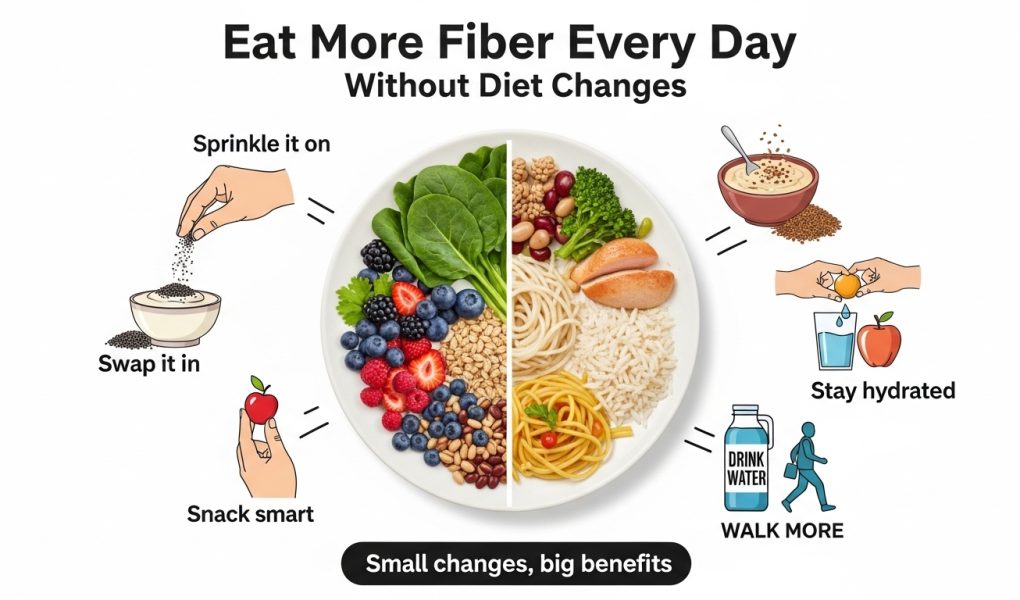
Snippet Answer: The easiest way to eat more fiber daily is by upgrading foods you already eat. Replace refined grains with whole grains, add vegetables to existing meals, include fruit as snacks, and choose fiber-rich toppings like seeds, beans, or nuts without changing your overall diet structure.
Answer Block: The simplest strategy for increasing fiber intake is improving the quality of foods already in your routine rather than replacing meals entirely. Small swaps like brown rice instead of white rice or adding vegetables to familiar dishes quickly raise fiber intake without extra effort.
Many people assume fiber improvement requires a strict meal plan. In reality, most diets already contain fiber sources. The issue is quantity and consistency.
Consider a typical day of meals. Breakfast often includes refined grains. Lunch may lack vegetables. Dinner may contain protein but limited plant diversity. Snacks are usually low-fiber processed options.
Each of these meals can be upgraded without replacing them:
- Switch white bread to whole grain bread
- Add one vegetable serving to lunch
- Include beans in dinner twice weekly
- Replace biscuits with fruit snacks
These adjustments increase fiber intake by 8–15 grams daily. That is nearly half the recommended intake for many adults.
The key principle is substitution, not restriction.
How Much Fiber Do You Actually Need Each Day?
Answer Block: Most adults need between 25 and 38 grams of fiber daily depending on age and gender. However, average intake in many countries remains below 15 grams per day, creating a significant gap that affects digestion, metabolism, and long-term health outcomes.
Understanding your target makes fiber improvement measurable and achievable.
| Group | Recommended Daily Fiber Intake |
|---|---|
| Women (19–50) | 25 grams |
| Men (19–50) | 38 grams |
| Women (50+) | 21 grams |
| Men (50+) | 30 grams |
Most people underestimate how large the fiber gap really is. A typical refined breakfast provides only 1–2 grams. Processed snacks provide nearly zero.
Closing the gap does not require dramatic change. Adding three fiber-rich foods daily usually solves the problem:
- One fruit serving (3–5 grams)
- One vegetable serving (4–6 grams)
- One whole grain serving (4–7 grams)
That alone adds up to 12–18 grams of additional fiber.
Which Everyday Foods Are Naturally High in Fiber?

Answer Block: Everyday fiber-rich foods include lentils, beans, oats, brown rice, vegetables, fruits with skin, nuts, seeds, and whole grain bread. These foods are already part of many regular meals and can increase fiber intake significantly without introducing unfamiliar ingredients.
The easiest fiber strategy is recognizing which foods already contain large amounts.
Here are high-impact additions you can rotate through weekly:
- Lentils: 15 grams per cooked cup
- Chickpeas: 12 grams per cup
- Oats: 4 grams per serving
- Apples with skin: 4 grams each
- Bananas: 3 grams each
- Carrots: 3–4 grams per cup
- Flaxseeds: 8 grams per tablespoon
Many households already consume rice, bread, vegetables, and legumes regularly. Increasing portion size slightly or improving preparation methods raises fiber intake naturally.
For example:
- Add lentils to rice dishes
- Mix vegetables into omelets
- Sprinkle seeds on yogurt
- Add beans to curries or soups
Consistency matters more than variety.
How Can You Add Fiber to Breakfast Quickly?
Answer Block: Breakfast fiber increases quickly by switching refined cereals to oats, adding fruit toppings, including seeds like flax or chia, or choosing whole grain bread instead of white bread. These small adjustments can add 5–10 grams of fiber within minutes.
Breakfast is the easiest place to improve fiber intake because it often starts very low.
Most traditional breakfasts rely heavily on refined carbohydrates. Replacing just one ingredient changes the nutritional profile immediately.
Simple upgrades include:
- Replace white toast with whole grain toast
- Add banana slices to cereal
- Choose oatmeal instead of processed cereal
- Mix chia seeds into yogurt
A single bowl of oatmeal with fruit already provides more fiber than many entire daily diets.
Another advantage of fiber-rich breakfasts is appetite control. Soluble fiber slows digestion and keeps you full longer.
This reduces unnecessary snacking later in the day.
How Can Lunch and Dinner Become More Fiber-Rich Without Extra Cooking?
Answer Block: Lunch and dinner fiber increases by adding vegetables to existing meals, replacing refined grains with whole grains, and including beans or lentils two to three times weekly. These adjustments require minimal preparation but significantly improve daily fiber intake.
Most meals already contain a structure that supports fiber improvement.
Instead of changing meals entirely, modify portions and ingredients.
Examples include:
- Add spinach to rice dishes
- Include side salads
- Use brown rice instead of white rice
- Mix lentils into curries
Even increasing vegetable portions slightly creates measurable improvement.
Another strategy is layering fiber into sauces. Tomato-based sauces naturally pair with beans, peas, or chopped vegetables.
This improves both flavor and nutritional density.
What Are the Best High-Fiber Snacks That Replace Processed Foods?
Answer Block: High-fiber snack alternatives include fruit, roasted chickpeas, nuts, seeds, yogurt with flaxseed, and whole grain crackers. Replacing processed snacks with these options adds 4–8 grams of fiber per serving without increasing preparation time.
Snacks are the most overlooked opportunity for fiber improvement.
Many processed snack foods contain almost no fiber. Replacing just one snack per day produces meaningful change.
Strong snack upgrades include:
- Apple instead of biscuits
- Peanuts instead of chips
- Roasted chickpeas instead of crackers
- Yogurt with seeds instead of sweets
Fiber-rich snacks also stabilize blood sugar levels.
This helps reduce energy crashes and improves focus throughout the day.
Can Increasing Fiber Help With Weight Control and Digestion?
Answer Block: Increasing fiber improves digestion, supports gut bacteria, reduces hunger signals, and stabilizes blood sugar levels. These combined effects help manage body weight naturally while reducing constipation, bloating, and cholesterol levels over time.
Fiber works through several biological mechanisms simultaneously.
First, soluble fiber absorbs water and slows digestion. This increases fullness and reduces calorie intake later.
Second, insoluble fiber supports bowel movement regularity.
Third, prebiotic fiber feeds beneficial gut bacteria. A stronger microbiome improves immune regulation and nutrient absorption.
Over time, higher fiber intake supports:
- Lower cholesterol
- Reduced blood sugar spikes
- Improved gut microbiome balance
- Better digestive regularity
These benefits accumulate gradually but consistently.
What Mistakes Should You Avoid When Increasing Fiber Intake?
Answer Block: Common fiber mistakes include increasing intake too quickly, drinking insufficient water, relying only on supplements, and ignoring food diversity. Gradual increases combined with hydration allow the digestive system to adjust comfortably and prevent bloating or discomfort.
Rapid fiber increases often cause temporary digestive discomfort.
The safest strategy is gradual improvement.
Follow this progression:
- Add one new fiber source daily
- Increase water intake
- Rotate food sources weekly
- Combine soluble and insoluble fiber
Diversity strengthens gut bacteria more effectively than repetition alone.
Food-based fiber also performs better than supplement-only approaches.
Conclusion: A Simple Strategy to Build a High-Fiber Routine That Lasts
Most people do not need a new diet to increase fiber intake. They need better versions of foods they already eat.
Replacing refined grains, adding vegetables to existing meals, choosing fruit snacks, and including legumes weekly can double fiber intake within days.
These adjustments improve digestion, stabilize energy levels, support gut bacteria, and reduce long-term disease risk.
The key is consistency rather than perfection.
Start with one change today. Replace one refined ingredient. Add one vegetable serving. Choose one fiber-rich snack.
Small daily upgrades create lasting health improvements.
Frequently Asked Questions
How long does it take to see benefits from eating more fiber?
Digestive improvements often appear within a few days, while cholesterol and blood sugar benefits typically develop over several weeks of consistent fiber intake.
Is it better to get fiber from food or supplements?
Whole foods provide vitamins, minerals, and antioxidants along with fiber, making them more effective than supplements for long-term health improvement.
Can too much fiber cause stomach discomfort?
Yes. Rapid increases in fiber intake may cause bloating or gas. Gradually increasing intake and drinking more water prevents most symptoms.
Does cooking vegetables reduce fiber content?
Cooking slightly reduces some nutrients but does not significantly reduce fiber content, making cooked vegetables still excellent fiber sources.
Are bananas high in fiber?
Bananas provide moderate fiber levels and are especially helpful when combined with other high-fiber foods like oats or nuts.
Is brown rice better than white rice for fiber intake?
Brown rice contains significantly more fiber than white rice and supports better digestion and blood sugar stability.
Can children benefit from higher fiber diets?
Yes. Fiber supports digestive health, appetite regulation, and gut microbiome development in children when introduced gradually through whole foods.
Read More Also: The impact and causes of three types of medication errors
Learn More: Why Tewksbury is a Great Place for a Winter Getaway