Key Takeaways
- Start by matching plants to the site’s sun, soil, moisture, and drainage.
- Use locally appropriate native plants and plan flowers for several seasons.
- Include host plants, nesting areas, shelter, and winter cover, along with blooms.
- Small gardens and containers can still provide meaningful habitat.
- New plantings need watering, weeding, and patience while they establish.
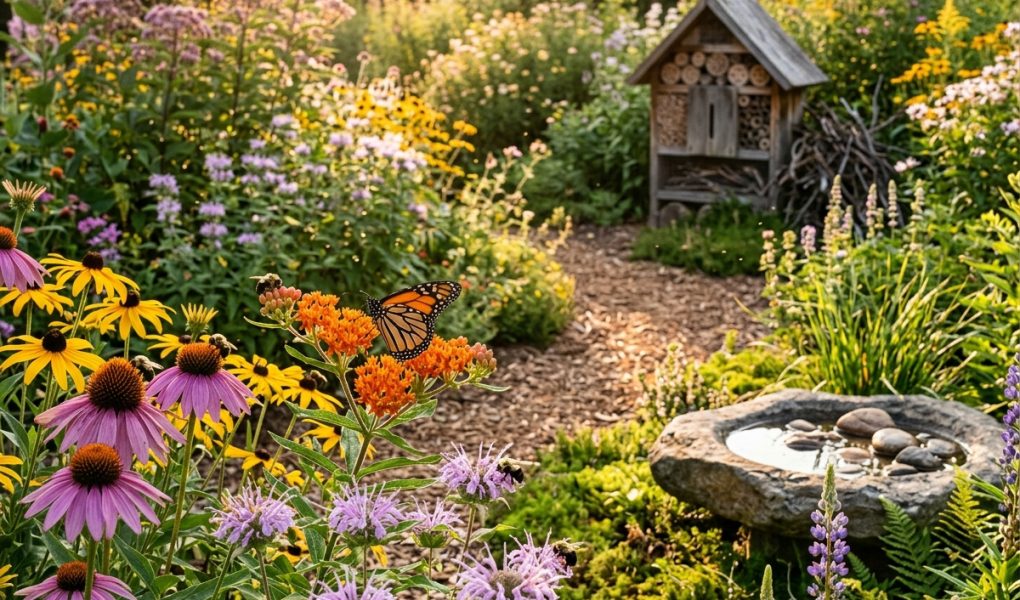
A pollinator garden can be a modest container display, a border beside a driveway, or a full backyard planting. The goal is not to create a perfect show garden. It is to provide useful food, cover, and breeding space for bees, butterflies, moths, beetles, and other beneficial insects. Starting with a thoughtful plan makes the project easier to maintain and more likely to support wildlife over time.
Plant choice matters, but site conditions matter first. Before purchasing anything from a native plant garden center, spend a few days observing the space. Sunlight, drainage, wind, soil texture, and available room will determine which plants can thrive without constant intervention.
Why Pollinator Gardens Matter
Pollinators move pollen between flowers, helping many wild plants reproduce and contributing to food production. A useful garden provides more than a brief display of nectar. It offers resources through changing seasons, including places where insects can feed, rest, nest, and survive winter. The U.S. Fish and Wildlife Service supports pollinator habitat efforts that emphasize how actions at home can contribute to broader habitat conservation.
Start With the Site
Observe the proposed bed before making a plant list. Note how many hours of direct sun it receives, where rainwater collects, whether soil stays wet or dries quickly, and how close the planting will be to paths, windows, fences, or utility lines. A shaded bed beneath mature trees is usually better suited to shade-tolerant woodland plants than sun-loving flowers that will struggle for light and moisture.
Choose Native Plants for Local Conditions
Native does not mean the same thing everywhere. A species indigenous to one part of the country may be poorly adapted elsewhere, so regional plant lists are more helpful than generic national lists. When comparing options at a native plant nursery, check both the common and scientific name, mature size, bloom period, light needs, moisture needs, growth habit, and role as a nectar, pollen, or caterpillar host plant.
Choose plants that fit the existing conditions rather than trying to rebuild the entire site around a single favorite flower. Group plants with similar water and sun requirements. Also, consider mature width carefully, since crowded perennials can create more work and reduce airflow as the planting fills in.
Plan for Several Bloom Seasons
A garden with flowers only in midsummer leaves gaps when many pollinators are active. Create a simple bloom calendar with several choices for each period:
- Early season: Include flowers and shrubs that offer food as temperatures rise.
- Midseason: Build the largest mix of blooms, along with grasses or sedges for structure.
- Late season: Reserve space for plants that flower into late summer and fall.
Use repeated groups rather than relying on one plant per season. Weather, browsing, and plant age can shift bloom timing, while overlapping species make the garden more dependable.
Add More Than Flowers
Adult insects may visit flowers for nectar and pollen, but their life cycles often depend on other features. Leave some bare, well-drained soil for ground-nesting bees, retain leaf litter beneath shrubs where practical, and allow a portion of hollow stems and seed heads to remain through winter. Native grasses, sedges, small shrubs, and safe pieces of dead wood can provide shelter and structure. Bee hotels are optional, and natural nesting areas are often simpler to maintain.
Design Small Spaces With Purpose
Limited space is not a reason to skip habitat gardening. A narrow fence border, sunny foundation bed, converted lawn corner, community plot, or several large containers can all contribute. In compact areas, repeat a few well-matched species in groups instead of planting one of everything. Repetition creates a calmer visual design and makes it easier for pollinators to find concentrated floral resources.
Planting and Early Care
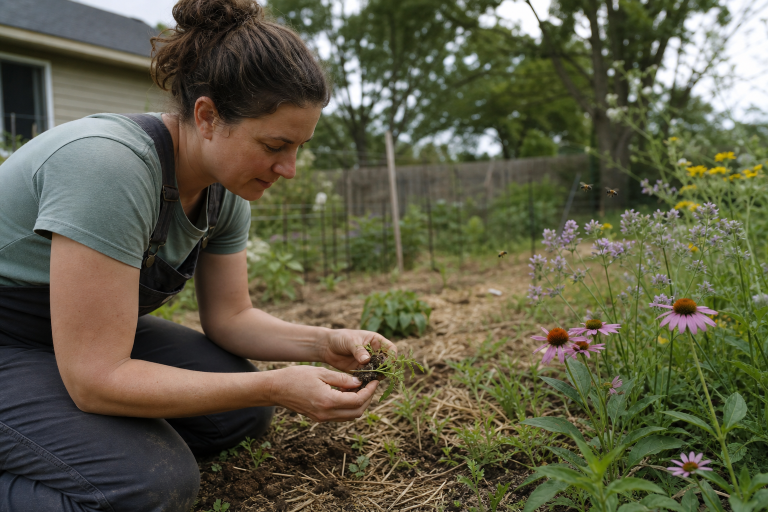
Native plants can be lower maintenance after establishment, but they are not maintenance-free from day one. Remove aggressive weeds and unwanted turf before planting, set plants according to mature spacing, water deeply during dry periods, and inspect the bed weekly in its first growing season. Seeds can be economical for large areas, while plugs and potted plants provide clearer placement and faster early coverage.
Maintenance and Pesticides
Manage a pollinator garden with light, regular attention. Pull weeds when they are small, water near the soil line, and accept minor leaf damage as part of an active ecosystem. Avoid routine pesticide use, especially when plants are flowering. EPA guidance on protecting bees and other pollinators from pesticides reinforces the importance of identifying a problem before choosing a treatment.
Cleanup can happen in stages rather than all at once. Leave some stems, leaves, and seed heads through winter, then remove material gradually as spring warms. Keep defined edges, paths, and intentional plant groupings so the garden looks cared for while still retaining habitat value.
Common Planning Mistakes
- Buying plants before checking sun exposure and drainage.
- Selecting flowers only for color instead of local suitability.
- Using a wildflower mix without reviewing every species included.
- Planting too closely and underestimating mature size.
- Removing all stems and leaf litter in the fall.
- Applying pesticides whenever insects appear.
- Expecting a perennial planting to look full within weeks.
Frequently Asked Questions
Do Pollinator Gardens Need to Be Large?
No. A small bed or container grouping can provide useful resources when plants match the setting and bloom across the season.
Are Native Plants Always Easy to Grow?
No. Even native plants can fail in the wrong light, soil, or moisture conditions. Good plant-site matching is essential.
Should Every Plant Be Native?
Not necessarily. Noninvasive ornamental plants may remain in a garden, but increasing locally appropriate native plants can add habitat value.
When Should Garden Cleanup Happen?
Leave some plant material in place through winter and clean up gradually in spring, allowing overwintering insects time to emerge.
Conclusion
A successful pollinator garden begins with observation, not impulse buying. Study the site, choose plants that fit it, plan overlapping bloom seasons, and retain habitat beyond flowers. Starting with one manageable bed can create a foundation for a healthier, more colorful outdoor space over the years ahead.