
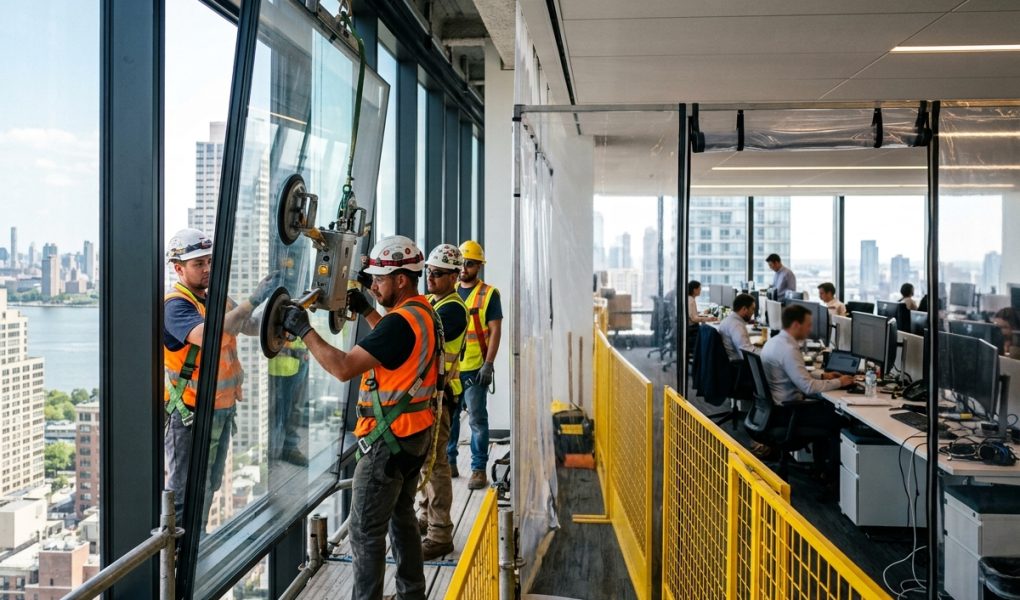
Upgrading exterior glazing on a busy corporate center sounds like a guaranteed recipe for operational paralysis. Skilled contractors tackle this complex logistical challenge daily without interrupting board meetings or retail transactions. Modern installation teams coordinate their movements with the silent efficiency of stagehands working during a live theatre production.
Setting up interior containment barriers to block dust and noise
Polyethylene sheeting lines the active workspace to isolate fine particulate matter from sensitive office electronics and servers. Portable negative-air scrubbers pull ambient room air through high-efficiency particulate air filters to capture stubborn drywall grit before it circulates into central ventilation shafts. Temporary insulated partition walls muffle abrasive grinding sounds so administrative departments continue answering client telephone calls without distraction.
Specialized magnetic seals clamp tightly around door frames to maintain airtight enclosures while technicians disassemble degraded framing members. Floor protection systems distribute heavy rolling traffic across sensitive hardwood or carpeted conference areas without leaving sticky adhesive residue behind. Routine indoor air quality testing confirms that volatile organic compounds from industrial primers dissipate safely away from occupied worker cubicles. Executing a proper commercial window installation hinges on these protective interior preparations just as much as the exterior glazing itself.
How installers move heavy lites through populated corridors
Moving eight-hundred-pound sheets of laminated architectural glass across finished lobbies requires meticulous planning. Motorized glass carts equipped with non-marking polyurethane tires roll across thick plywood runners to protect polished terrazzo flooring from impact damage. Battery-powered vacuum lifters hoist bulky assemblies upright, letting technicians glide through narrow service elevator doorways with mere millimeters of clearance.
Off-hours delivery windows prevent freight elevator congestion from interfering with morning catering deliveries or routine parcel courier runs. Riggers coordinate dedicated staging spaces inside designated loading docks so oversized glass crates never obstruct marked emergency egress pathways. Precision handling remains essential during targeted commercial glass replacement where sharp turns around structural concrete pillars could shatter unmounted panels. Experienced handlers guide each panel with dual-cup suction tools, maintaining absolute physical control until units lock safely into structural openings.
Phased floor-by-floor scheduling that keeps businesses open
Staggered work plans divide multi-story office buildings into manageable geographic quadrants instead of stripping entire exterior facades simultaneously. Tenants shift between temporary hoteling desks for two or three days while mechanics remove existing window sash assemblies directly beside their usual stations. Project managers synchronize these localized displacements weeks in advance so departmental directors schedule remote work days during the loudest extraction phases.
Crews complete one vertical elevation drop before touching adjacent structural bays, keeping the building envelope weather-tight at the end of each shift. Fast-curing structural silicones enable rapid perimeter weatherproofing, allowing treated rooms to return to full occupant capacity by the following morning. Structured sequencing turns an otherwise disruptive commercial window replacement into an orderly, highly predictable background facility upgrade. Facility directors appreciate this operational predictability because it prevents costly revenue losses caused by unexpected floor-wide office closures.
What exterior overhead safeguards protect pedestrian traffic below?
Sidewalk sheds and heavy timber scaffolds shield ground-level public doorways from accidental masonry chips or fastener drops during upper-elevation demolition. Debris containment netting wraps around swinging suspended stages to catch stray screws, sealant scrapings, or broken glazing fragments before they plummet downward. Certified flaggers direct foot traffic safely around crane outriggers and hoist zones to ensure municipal safety compliance throughout active vertical lifts.
Weather monitoring stations mounted directly on rooftop rigs alert field crews to sudden thermal updrafts or wind gusts exceeding safe handling thresholds. Safety tethers secure every mechanical hand tool to a technician’s harness, eliminating loose drop risks above busy metropolitan sidewalks. Ground-level spotters communicate continuously via dedicated radio channels with crane operators maneuvering heavy boom lifts against the exterior facade. Rigorous perimeter cordons reassure passing pedestrians and daily commuters that overhead structural activity poses zero threat to their safety.
Balancing indoor climate control when wall cavities sit open
Uncontrolled drafts can quickly overwhelm building heating equipment if perimeter structural openings remain exposed to harsh outdoor weather conditions. Thermal barriers crafted from reinforced vinyl membrane sheets seal off active window bays immediately after workers pry out failed insulated units. Dedicated air dampers divert indoor conditioned airflow toward interior offices, preventing perimeter wall thermostats from triggering unnecessary central heating or cooling spikes. Quick-set expansion foam fills exterior perimeter gaps within minutes, stabilizing the internal microclimate long before decorative aluminum trim caps snap into place.
Property managers seeking commercial glass replacement near me require certified glaziers who understand how to preserve building comfort during complex installations. North Alabama Glass brings the advanced rigging systems, containment methods, and precise scheduling necessary to renovate operational commercial properties smoothly. Their experienced technicians manage every operational detail from acoustic buffering to structural glass setting so everyday business operations proceed without disruption. Investing in professional glazing expertise guarantees durable exterior weatherproofing alongside an orderly, tenant-friendly work environment from start to finish.

